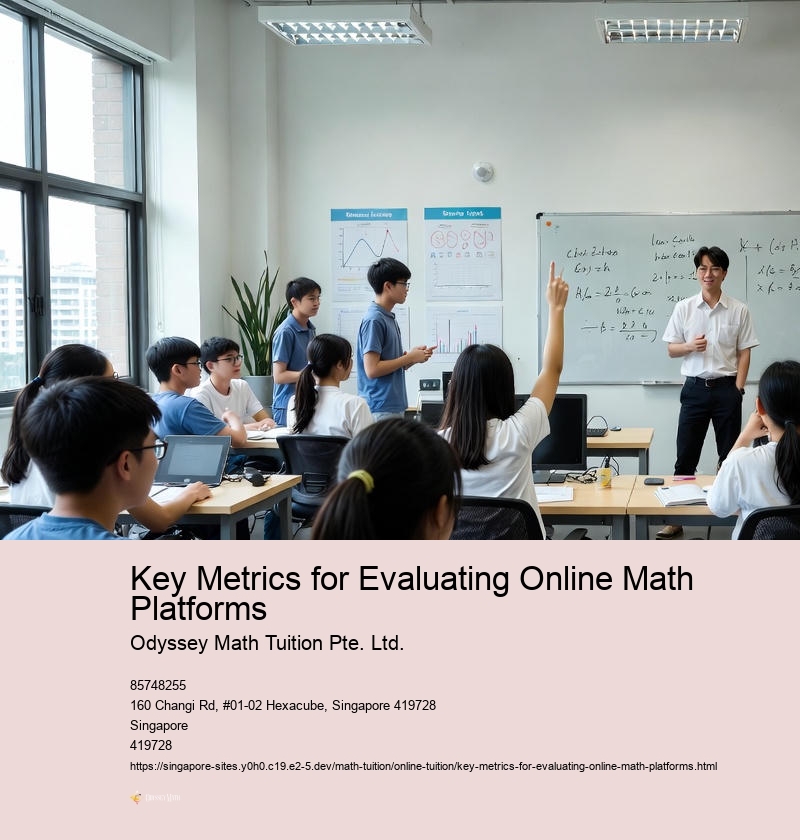
Key Metrics for Evaluating Online Math Platforms

User-Friendly Interface

Imagine a bustling Singaporean household, where the aroma of freshly brewed kopi mingles with the gentle hum of a laptop. Here, a young student sits, eyes glued to the screen, navigating through an online math platform with the skill of a seasoned pilot. The journey through the world of online tuition can be as smooth as a well-laid road or as challenging as a winding mountain path. But what makes a platform truly user-friendly for both parents and students in Singapore's competitive educational landscape?

Setting the Stage: The Digital Classroom

In the age of digital transformation, online tuition is not just a trend but a necessity. It offers students the flexibility to learn from anywhere, turning dining tables into desks and living rooms into classrooms. The backbone of effective online learning platforms is their structure, allowing seamless delivery of courses tailored to the needs of Singaporean students preparing for critical exams like the PSLE, O-Levels, or A-Levels.

  • Singapore has one of the highest rates of internet penetration in the world, making it a prime location for online learning.

The Power of Navigation

Consider an online math platform as a vast library. Without a clear map, even the most resourceful student can feel lost. Parents seeking detailed information on Singapore's educational curriculum and standards can visit the MOE singapore website for comprehensive resources.. A user-friendly interface acts as a guide, ensuring that students can effortlessly find the resources they need, from video lectures to interactive exercises. Key features such as intuitive menus, search functions, and organized content libraries are essential for a smooth learning experience.

Accessibility: Learning Without Barriers

Accessibility is the cornerstone of online tuition. Platforms must cater to diverse users, including those with varying levels of tech-savviness. Features such as adjustable text sizes, voice commands, and compatibility with multiple devices ensure that learning is inclusive. For parents and students juggling hectic schedules, the ability to access recorded sessions or e-learning resources at their convenience is invaluable.

Engagement Through Interactive Tools

What if learning math could be as engaging as playing a video game? Interactive tools like shared whiteboards and digital quizzes transform abstract concepts into tangible experiences. These features not only enhance understanding but also make learning enjoyable, keeping students motivated and eager to explore more.

  • Research shows that interactive learning can increase student engagement by up to 60% compared to traditional methods.

Personalization: A Tailored Learning Journey

Every student is unique, with distinct strengths and areas for improvement. Effective online learning platforms offer personalized pathways, using data-driven insights to adapt to individual learning styles. This personalization ensures that students receive the support they need, whether they're grappling with algebra or mastering calculus.

Building Trust with Reliable Support

Behind every successful online tuition platform is a team of dedicated educators and technical support staff. These unsung heroes ensure that the digital classroom runs smoothly, providing assistance whenever technical glitches arise. Their commitment to excellence builds trust, giving parents the confidence that their children are in capable hands.

Security: Safeguarding the Digital Environment

In a world where data is a prized asset, ensuring the security of online platforms is paramount. Robust security measures protect sensitive information, allowing students and parents to focus on learning without worry. This commitment to safety is crucial in maintaining the integrity of the online learning experience.

Looking Ahead: The Future of Online Math Platforms

As technology evolves, so too will online tuition platforms. Imagine a future where artificial intelligence guides students through personalized learning journeys, or where virtual reality brings math concepts to life in immersive 3D environments. Numerous parents in Singapore are opting for reliable online tuition services to aid their young ones thrive in tough disciplines like mathematics.. These innovations hold the promise of transforming how students in Singapore and beyond engage with math, making learning more accessible and exciting than ever before.

In the end, the true measure of an online math platform's success lies in its ability to adapt to the needs of its users, providing a seamless, engaging, and secure learning environment. As Singaporean parents and students embark on their educational journeys, these platforms serve as invaluable companions, lighting the way toward academic excellence.

Comprehensive Curriculum Coverage

Imagine a bustling Singaporean household, where parents, balancing careers and family responsibilities, gather around the dining table, laptops open, evaluating the best online tuition platforms to help their children excel in mathematics. In this digital age, the quest for quality education transcends the four walls of a classroom, venturing into the virtual realm where flexibility and comprehensive curriculum coverage are paramount.

Unveiling the Digital Classroom

Online tuition has transformed the way students in Singapore approach learning, especially in subjects as challenging as mathematics. With platforms that integrate video calling tools like Zoom and Skype, students can explore complex math concepts from the comfort of their homes. The appeal of online tuition lies in its ability to replicate traditional tutoring while offering unmatched convenience.

Seamless Integration with Curriculum Requirements

The effectiveness of an online math platform depends on its alignment with the curriculum requirements across various educational levels. For primary school students preparing for the PSLE, the focus is on foundational concepts such as fractions and problem-solving. Secondary school students, particularly those tackling O-Level and N-Level exams, require platforms that delve into algebra, geometry, and trigonometry. Junior College students, on the other hand, need comprehensive coverage of advanced topics like calculus and statistics.

To truly evaluate a platform's curriculum coverage, parents and students should explore the depth and breadth of content offered. Does the platform provide structured self-paced programs? Are there interactive tools like shared whiteboards to enhance learning? These questions guide the selection process, ensuring the chosen platform meets the rigorous demands of Singapore’s education system.

  • Fun Fact: Singapore consistently ranks among the top in global education assessments, making it crucial for online platforms to align with its high standards.

Effective Online Learning Platforms

What makes an online learning platform stand out in the crowded digital education landscape? It’s the ability to facilitate remote education effectively. A robust platform not only delivers content but also engages students, fostering an interactive learning environment.

Interactive Tools and Resources

  • Shared Whiteboards: These tools allow for real-time problem-solving, mimicking the collaborative nature of a physical classroom.
  • Recorded Sessions: Students can revisit lessons, reinforcing their understanding of complex topics.
  • E-Learning Resources: Pre-recorded videos, digital notes, and past exam questions are invaluable for self-paced learning.

These features transform the learning experience, making it dynamic and adaptable to individual student needs.

  • Fun Fact: The use of shared whiteboards in online learning has been shown to increase student engagement and understanding by promoting active participation.

The Art of Flexibility and Accessibility

In an era where time is a precious commodity, flexibility becomes a cornerstone of effective online tuition. Parents and students alike are drawn to platforms that offer scheduling adaptability, allowing lessons to fit seamlessly into busy lifestyles. This flexibility extends beyond scheduling; it encompasses the ability to learn from anywhere, eliminating geographical constraints.

Affordability Meets Quality

While quality education often comes at a price, online platforms strive to balance affordability with excellence. Many offer tiered pricing structures, enabling families to select packages that align with their financial capabilities without compromising the quality of education.

  • Fact: Many online platforms offer free trial periods, allowing families to explore their offerings before committing financially.

A Glimpse Into the Future

As we look into the future of online tuition, the potential for innovation is boundless. Imagine a platform that uses artificial intelligence to tailor lessons to each student's learning pace, or one that employs virtual reality to bring abstract math concepts to life. These advancements could redefine the landscape of digital education, making learning not only effective but also exciting.

For Singaporean parents navigating the competitive education system, the journey to find the right online math platform is akin to solving a complex equation. It requires careful consideration of curriculum coverage, platform effectiveness, flexibility, and affordability. As the digital classroom continues to evolve, one thing remains certain: the pursuit of knowledge, whether in a physical or virtual setting, is a journey worth embarking on.

Interactive Learning Tools

Shared Whiteboards

Shared whiteboards are a fundamental part of interactive learning tools, enabling students and tutors to collaborate in real-time, similar to a physical classroom setting. These digital canvases allow for the drawing of diagrams, writing of equations, and explanation of complex concepts, bridging the gap between physical and virtual learning environments. In online tuition, especially for math, this feature is crucial, providing a space where students can visualize problems and solutions dynamically. By engaging with material visually and interactively, students often find it easier to understand challenging topics, enhancing their comprehension and retention. The shared whiteboard becomes a shared space for creativity and exploration, where mistakes are easily erased and new ideas can flourish.

- Shared whiteboards are often used in STEM education to illustrate complex theories and calculations in an accessible way.

Digital Aids

Digital aids include a variety of tools designed to enrich the online learning experience, from calculators and graphing tools to interactive simulations and videos. These aids make abstract mathematical concepts more tangible, offering students diverse ways to engage with the material. For instance, graphing tools can help visualize functions and transformations, making it easier to understand their properties and applications. By integrating digital aids into their lessons, tutors can provide a more comprehensive and engaging educational experience, catering to different learning styles and needs. This adaptability is crucial in a diverse educational landscape, where personalized learning paths can significantly enhance student outcomes.

- Interactive simulations can replicate real-world scenarios, helping students apply theoretical knowledge practically.

Engagement Features

Engagement features in online learning platforms are designed to keep students motivated and involved in their studies. Examples include quizzes, polls, and gamified elements that transform learning into an interactive adventure. These features encourage active participation, helping students to test their understanding and receive immediate feedback. In the competitive educational environment of Singapore, maintaining student engagement is vital for academic success, particularly in subjects like math that require sustained focus and practice. By incorporating these features, online tuition platforms can create a dynamic learning environment that fosters curiosity and perseverance.

- Gamified learning can increase student motivation by incorporating elements of play into the educational process.

Feedback Systems

Feedback systems are essential components of effective online learning platforms, providing students with the guidance needed to improve and excel. These systems can include automated feedback on quizzes, detailed reports on progress, and personalized comments from tutors. In the context of online tuition, timely and constructive feedback helps students identify areas for improvement and celebrate their achievements. This continuous loop of assessment and feedback supports a growth mindset, encouraging students to view challenges as opportunities for learning. By fostering a culture of feedback, online platforms can help students build confidence and develop a deeper understanding of mathematical concepts.

- Studies show that immediate feedback can significantly enhance learning outcomes by allowing students to quickly correct mistakes.

Interactive Sessions

Interactive sessions are at the core of online tuition, transforming traditional lectures into dynamic exchanges between students and tutors. These sessions often utilize video conferencing tools that allow for real-time communication, making learning more personal and engaging. Through interactive sessions, tutors can adapt their teaching methods to suit individual student needs, providing targeted support and encouragement. This personalized approach is particularly beneficial for students preparing for critical examinations, as it allows them to focus on specific areas of difficulty. By making learning a collaborative and interactive process, online tuition platforms can foster a more engaging and effective educational experience.

- Video conferencing tools have advanced significantly, offering features like breakout rooms and screen sharing to enhance interactive learning.

Quality of Instructional Content

Imagine a world where every child in Singapore, regardless of their academic level, can explore the wonders of mathematics from the comfort of their home. This is not a distant dream but a current reality, thanks to the rise of online tuition platforms. These digital classrooms are transforming education, providing students with access to high-quality instruction and resources that were once exclusive to traditional tutoring centers.

The Evolution of Online Tuition

Online tuition has reshaped the educational landscape in Singapore. Gone are the days when students had to travel long distances to attend a tuition class. With platforms like Zoom and Skype, learning is now just a click away. These platforms not only replicate the traditional classroom experience but enhance it with interactive tools like shared whiteboards and digital resources. What if your child's next math breakthrough is just a virtual session away?

Assessing the Quality of Instructional Content

For parents exploring the myriad of online math platforms, one of the most crucial aspects to consider is the quality of instructional content. The clarity and relevance of video lessons, exercises, and e-learning materials can significantly impact a student's learning experience. High-quality content acts as a well-lit path guiding students through the complexities of math, illuminating concepts and fostering a deeper understanding.

Reputable platforms ensure their content aligns with Singapore's rigorous curriculum standards, covering essential topics from fractions and model drawing for primary levels to calculus and statistics for junior college students. But how do you identify quality? Look for platforms that offer structured lessons, clear explanations, and interactive exercises that engage students and encourage active learning.

  • Fun Fact: Singapore consistently ranks among the top in international math assessments, such as the Programme for International Student Assessment (PISA), highlighting the effectiveness of its curriculum.

Effective Online Learning Platforms

Not all online platforms are created equal. An effective platform acts as a sturdy bridge connecting students to their educational goals. Key features of such platforms include user-friendly interfaces, comprehensive resource libraries, and robust support systems. These elements combine to create seamless learning experiences, where students can focus on mastering math concepts rather than navigating technical hurdles.

Consider platforms that offer personalized learning paths, allowing students to progress at their own pace. Whether it's preparing for the PSLE or tackling A-Level math, a tailored approach can significantly enhance a student's confidence and performance.

  • Did you know? Personalized learning has been shown to improve student engagement and outcomes by catering to individual learning styles and paces.

Interactive E-Learning: The Future of Math Education

As we look to the future, the role of interactive e-learning resources becomes increasingly pivotal. These resources, including pre-recorded videos, notes, past exam questions, and structured self-paced programs, provide flexible learning opportunities. They are the unsung heroes of online tuition, offering students the chance to revisit challenging topics and reinforce their understanding at any time.

Imagine a student preparing for their O-Level exams, able to access a library of past exam questions with detailed solutions at their fingertips. This level of accessibility and convenience is transforming how students approach their studies, making learning a more dynamic and engaging process.

Looking Ahead: The Promise of Online Tuition

As we continue to adapt to a digital-first world, online tuition is set to play an even more vital role in education. The flexibility, affordability, and accessibility it offers are invaluable to busy families seeking quality academic support. What if this shift towards online learning could democratize education, making high-quality instruction available to every student in Singapore, regardless of their background?

For parents and students alike, the key is to choose platforms that not only meet educational needs but also inspire a love for learning. As we embrace this new era of education, the potential for growth and innovation in online tuition is boundless. It's an exciting journey, one that promises to reshape the educational landscape for generations to come.

Performance Tracking and Feedback

Imagine a bustling Singaporean household, where the aroma of freshly brewed kopi mingles with the sound of children’s laughter and the soft hum of a laptop. In this digital age, the dining table transforms into a classroom, where students engage with online tuition sessions to master the nuances of math. How do parents and students ensure these virtual classes are effective? The answer lies in understanding key metrics that evaluate the success of these online platforms.

The Heartbeat of Learning: Engagement Metrics

Online tuition platforms thrive on engagement. Like the pulse of a living organism, engagement metrics reveal the vitality of a student's learning experience. Consider a platform that tracks active participation through interactive quizzes, live polls, and breakout sessions. These tools not only assess student involvement but also foster a dynamic and interactive learning environment. What if every click, question, and response was a step closer to mastering algebra or geometry?

  • Fun Fact: According to a study by the National Center for Education Statistics, students who are actively engaged in their learning are more likely to achieve higher academic success.

Feedback: The Compass for Improvement

Feedback in online tuition serves as a guiding compass, illuminating the path to academic growth. Platforms offering immediate feedback through AI-driven assessments or personalized tutor comments provide students with real-time insights into their performance. This feedback loop resembles a seasoned coach guiding an athlete, highlighting strengths and pinpointing areas for improvement. Picture a student receiving tailored advice on tackling calculus problems, transforming challenges into stepping stones.

  • Fun Fact: Research from the University of Michigan shows that students who receive regular feedback are 30% more likely to improve their grades compared to those who do not.

Tracking Progress: The Academic GPS

Imagine a GPS navigating a driver through the bustling streets of Singapore. Similarly, progress tracking in online tuition helps students and parents monitor academic journeys. Platforms that offer detailed progress reports, visual dashboards, and performance analytics empower parents to make informed decisions. These tools act as a beacon, ensuring students stay on course toward their educational goals.

  • Did you know? A report by EdTech Magazine found that 75% of educators believe that data analytics can significantly enhance student achievement.

Effective Learning Platforms: The Digital Canvas

Effective online learning platforms are akin to a well-crafted canvas, providing the structure for vibrant educational experiences. A robust platform ensures seamless integration of e-learning tools, from interactive whiteboards to video conferencing features. For instance, platforms like Zoom or Skype, coupled with shared digital resources, create a virtual classroom that rivals traditional setups. What if the future of learning is not confined to a brick-and-mortar classroom but is instead a borderless, digital tapestry?

Innovations and Future Possibilities

As technology evolves, so do the possibilities for online tuition. Imagine AI tutors that adapt lessons in real-time, or virtual reality modules that transport students into historical math scenarios. These innovations promise to redefine educational landscapes, making learning more immersive and personalized. What if the next generation of students could explore mathematical concepts through virtual worlds, breaking free from conventional pedagogy?

In the vibrant and competitive educational ecosystem of Singapore, online tuition offers a lifeline for students striving for excellence. By understanding and leveraging key metrics like engagement, feedback, and progress tracking, parents and students can navigate this digital realm with confidence. As we stand on the cusp of educational transformation, the future of learning looks promising, filled with endless possibilities and the potential to inspire a love for math in every student.

Flexibility and Accessibility

Imagine a world where your child’s math tutor is available at the click of a button, ready to transform complex algebraic equations into simple, digestible concepts. This is the promise of online tuition—a digital revolution in education. In Singapore, where academic excellence is highly valued, parents are increasingly turning to online math platforms that offer flexibility and accessibility for their children’s educational needs.

Unveiling the Magic of Anytime, Anywhere Learning

Picture this: it’s 8 PM, and your child just finished dinner. Instead of rushing to a tuition center, they simply log into their computer. The virtual classroom is alive with interactive tools—shared whiteboards, instant messaging, and video calls. This is the beauty of online tuition: it adapts to your schedule, not the other way around.

For Singaporean parents, especially those with children preparing for pivotal exams like the PSLE, O-Levels, or A-Levels, this flexibility is transformative. No longer confined to rigid class schedules, students can now access learning materials and classes at times that suit their busy lives. Whether it’s early morning sessions before school or late-night problem-solving marathons, the digital classroom is always open.

The Anatomy of Effective Online Learning Platforms

What makes an online math platform effective? At its core, it must facilitate a seamless learning experience. This means providing a robust structure where students can access courses, interact with tutors, and track their progress—all from the comfort of their homes.

Consider the platform as a well-oiled machine. Each component, from user-friendly interfaces to reliable video conferencing tools, works together to create an immersive learning environment. For instance, platforms like Zoom or Skype are often integrated with interactive features such as digital whiteboards and screen-sharing capabilities, transforming traditional lessons into dynamic, engaging sessions.

Moreover, the availability of recorded sessions and e-learning resources—such as past exam questions and structured self-paced programs—ensures that students can revisit challenging topics at their own pace, reinforcing learning and boosting confidence.

Breaking the Boundaries of Conventional Education

Online tuition is not just about convenience; it’s about breaking barriers. In a city-state like Singapore, where space is a premium, online platforms eliminate the need for physical classrooms, making learning accessible to everyone, regardless of their location.

Consider a student living in a remote area or a family frequently relocating due to work commitments. With online tuition, geographical constraints dissolve, allowing uninterrupted learning. This accessibility is particularly beneficial for international students or those following curricula like IGCSE or IB, who can continue their education seamlessly, no matter where life takes them.

Adapting to the Digital Age: A Journey for Parents and Students

As parents navigate this digital landscape, understanding the key metrics for evaluating online math platforms becomes vital. It’s akin to selecting the perfect recipe for success—balancing ingredients like affordability, flexibility, and quality of instruction.

Parents should look for platforms that offer detailed analytics on their child’s performance, enabling them to track progress and identify areas needing improvement. Additionally, the inclusion of interactive digital aids and personalized instruction can significantly enhance the learning experience, transforming abstract math concepts into tangible understanding.

Moreover, affordability is a crucial consideration. While investing in education is a priority, finding cost-effective solutions that do not compromise on quality is essential for many families. Online platforms often provide various pricing models, allowing parents to choose packages that best suit their budget and their child’s educational needs.

The Future of Learning: An Invitation to Explore

As we stand on the brink of a new educational era, the possibilities are boundless. What if every student could learn at their own pace, unrestricted by time or location? What if technology could make math not just a subject but a thrilling adventure?

The journey of online tuition is just beginning, and it invites parents and students alike to explore its potential. By embracing this digital transformation, we’re not just preparing our children for exams; we’re equipping them with the skills and confidence to thrive in an ever-evolving world.

So, as you sip your coffee and ponder the future of your child’s education, consider the vibrant world of online math platforms. It’s more than just a technological shift; it’s a gateway to a brighter, more accessible learning journey for every student in Singapore.

Affordability and Value

Imagine a bustling kitchen, where every ingredient plays a crucial role in crafting the perfect dish. Now, picture online tuition as that kitchen, where each element—cost, content quality, and platform effectiveness—must harmonize to create a valuable educational experience. In Singapore's competitive academic landscape, parents are not just looking for any meal; they’re seeking a gourmet experience that offers both affordability and value for their children’s math education. How do they ensure they’re getting the best value for their investment?

Cost-Effectiveness: More Than Just a Price Tag

When evaluating online tuition platforms, the first metric that often comes to mind is cost. But affordability goes beyond the sticker price. It’s about understanding the value derived from each dollar spent. Parents must weigh subscription fees or course costs against the quality of content and the educational outcomes promised. Does the platform offer a comprehensive curriculum that aligns with the syllabus? Are there additional resources like practice exams and interactive tools? These are the questions that guide savvy parents in their quest for cost-effective solutions.

  • According to a 2022 study, 70% of parents in Singapore consider both cost and content quality when choosing online tuition platforms.

Quality Content: The Heart of Learning

In the realm of online tuition, content is king. A platform may boast affordability, but without high-quality content, it’s like a cookbook filled with lackluster recipes. Quality content is characterized by well-structured lessons, clear explanations, and engaging materials that cater to different learning styles. For instance, interactive simulations can make abstract concepts like algebra come alive, while video tutorials offer step-by-step problem-solving techniques. Parents should explore whether the platform’s content is regularly updated and if it includes input from experienced educators who understand the nuances of Singapore’s math syllabus.

  • Fun Fact: Singapore consistently ranks high in global math assessments, making quality math education a priority for many families.

Effective Online Learning Platforms: The Backbone of E-Learning

Imagine trying to bake a cake without a reliable oven. This is akin to attempting online tuition without a robust platform. A seamless learning experience hinges on an effective online learning platform that facilitates remote education. Such platforms should offer user-friendly interfaces, stable streaming for live sessions, and compatibility with various devices. They should provide a structure that supports interactive learning, such as shared whiteboards and virtual classrooms. Moreover, features like recorded sessions and progress tracking are invaluable for busy families who need flexibility in their learning schedules.

  • News: The global e-learning market is projected to reach $375 billion by 2026, highlighting the growing importance of effective online platforms.

Flexibility and Accessibility: Learning on Your Terms

In today’s fast-paced world, flexibility is a non-negotiable factor for many families. Online tuition offers the convenience of learning from anywhere, at any time, as long as there’s a stable internet connection. This flexibility is particularly beneficial for students juggling multiple commitments or for those who thrive in self-paced learning environments. Platforms that provide on-demand access to recorded lessons and e-learning resources empower students to revisit challenging topics at their convenience, reinforcing their understanding and boosting their confidence.

Future of Online Tuition: A Call to Action

The landscape of education is evolving, and online tuition is at the forefront of this transformation. As parents and students navigate this digital frontier, it’s crucial to remain informed and discerning. By prioritizing platforms that balance affordability with high-quality content and effective delivery, they can unlock the full potential of online learning. What if every child in Singapore had access to such resources? The possibilities are endless, and the journey towards academic excellence is just a click away.

In the end, selecting an online tuition platform is like curating a personalized educational feast. It requires careful consideration of various ingredients—cost, content, and platform effectiveness—to ensure a satisfying and enriching experience. As parents and students in Singapore embark on this journey, they hold the power to shape a future where quality education is accessible to all, paving the way for a brighter tomorrow.

Tech Support and Customer Service

Imagine a bustling Singaporean household in the evening. Parents are returning from work, children are wrapping up their school day, and in the midst of it all, there's a palpable tension: the looming shadow of math exams. In this digital age, the solution often lies in online tuition platforms. But how do parents ensure they're choosing the best one? Understanding key metrics for evaluating these platforms becomes crucial.

Unveiling the Digital Classroom

Picture this: a virtual classroom where the walls are lines of code, and the blackboard is a shared screen. Online tuition in Singapore has transformed traditional learning into an interactive digital experience. These platforms offer more than just video calls; they provide a comprehensive suite of tools tailored to each student’s needs. But what ensures a platform stands out in this crowded space?

  • Fun Fact: The first online course was offered in 1984 by the University of Toronto, showcasing the long-standing evolution of digital learning.

User Satisfaction: The Heartbeat of Success

At the core of any successful online tuition platform is user satisfaction. Imagine a platform as a symphony, where each feature must harmonize to create a seamless learning experience. How swiftly does the platform resolve issues? Is there a 24/7 support system in place? For parents, the assurance that their child's learning won't be disrupted by technical glitches is invaluable. Platforms like Zoom and Skype, often used for these sessions, are renowned for their reliability, but the true test lies in the support systems that accompany them.

  • Fact: According to a 2021 survey, 87% of parents consider customer support a critical factor when choosing an online learning platform.

Effective Online Learning Platforms: A Blueprint for Success

Consider a platform as a virtual school, where the infrastructure is as important as the curriculum. Effective online learning platforms must offer a robust structure that facilitates remote education effectively. This includes intuitive interfaces, interactive tools like shared whiteboards, and a wealth of e-learning resources such as recorded sessions and structured self-paced programs. These features not only enhance the learning experience but also provide flexibility and accessibility, crucial for students juggling multiple responsibilities.

  • Fact: A study by the eLearning Industry found that 72% of students reported increased engagement when using interactive tools in their online learning.

The Role of Interactive Tools in Learning

Imagine trying to solve a complex math problem without being able to scribble down your thoughts. Interactive tools like digital whiteboards and collaborative documents are the unsung heroes of online tuition, allowing for real-time problem-solving and brainstorming. These tools ensure that learning is not a passive experience but an engaging journey where students actively participate and visualize concepts, making even the most daunting algebraic equations approachable.

  • Fun Fact: The concept of a "whiteboard" dates back to the 1960s, when it was first used in classrooms to replace traditional blackboards.

Challenges and Innovations: Navigating the Digital Landscape

Every innovation comes with its set of challenges. For online tuition platforms, these include ensuring cybersecurity, maintaining student engagement, and providing personalized learning experiences. However, the industry is ever-evolving, with innovations like AI-driven analytics and adaptive learning techniques paving the way for more tailored educational experiences. Imagine a future where platforms anticipate a student’s needs, offering resources even before questions are asked.

  • Fact: In 2022, the global e-learning market was valued at over $250 billion, highlighting the rapid growth and demand for digital education solutions.

A Future of Endless Possibilities

As we look to the future, the landscape of online tuition in Singapore appears bright and full of possibilities. What if these platforms could not only teach but also inspire a lifelong love for learning? The potential is limitless. By focusing on key metrics like user satisfaction and effective platform design, we can ensure that online tuition continues to be a beacon of support for students striving to excel in their mathematical pursuits.

In this journey through the world of online math platforms, we’ve seen how critical it is to choose the right tools for our children’s education. Like a ship navigating through uncharted waters, the right platform, with its robust support and innovative tools, can steer students towards academic success, ensuring they are well-prepared for the challenges of tomorrow.

Community and Peer Interaction

Imagine a bustling marketplace, not of goods, but of ideas, where students from all walks of life gather to exchange knowledge, challenge each other, and grow collectively. This is the essence of a vibrant online math platform, especially in a place as education-focused as Singapore. Parents and students alike are increasingly turning to such platforms, seeking more than just academic excellence—they desire community, interaction, and a shared journey towards mastering mathematics.

Building Bridges in a Digital Classroom

In the realm of online tuition, the ability to facilitate peer interaction and community building is not just a feature—it's a necessity. A robust platform acts as a bridge, connecting learners who might otherwise be isolated in their individual study spaces. In Singapore, where the competition is fierce and the stakes are high, these digital connections often become lifelines. They provide students with opportunities to discuss complex problems, share insights, and support each other through the rigors of exams like the PSLE, O-Levels, and A-Levels.

  • Singapore consistently ranks high in global education assessments, making it a hub for innovative learning solutions.

Effective Online Learning Platforms

At the heart of successful online tuition lies an effective online learning platform. These platforms are the backbone of remote education, providing a structured environment for delivering courses efficiently. Features such as interactive whiteboards, real-time quizzes, and collaborative tools transform a solitary learning experience into a dynamic, engaging one. They ensure that students are not just passive recipients of information, but active participants in their learning journey.

  • Interactive whiteboards can increase student engagement by up to 30% compared to traditional methods.

The Role of Community in Learning

Community plays a pivotal role in learning. Think of it as a garden where ideas are planted, nurtured, and allowed to flourish. In an online math platform, community manifests through discussion forums, group projects, and peer tutoring sessions. These elements foster a sense of belonging and motivate students to push their boundaries. In Singapore's competitive educational landscape, this sense of community can be the difference between mere understanding and true mastery.

  • Studies show that students involved in peer tutoring can improve their grades by up to 10%.

Interactive Tools: The Unsung Heroes

Interactive tools are the unsung heroes of online tuition platforms. They are the gears that keep the engine of learning running smoothly. From virtual breakout rooms for group discussions to gamified quizzes that make learning fun, these tools enhance engagement and facilitate deeper understanding. For Singaporean students preparing for critical exams, these tools offer a way to practice and perfect their skills in a supportive, interactive environment.

  • Gamified learning can increase motivation and retention rates by up to 50%.

Looking Ahead: The Future of Online Tuition

As we look to the future, the potential of online tuition platforms to revolutionize education is boundless. What if these platforms could use AI to personalize learning paths for each student? Or employ virtual reality to simulate real-world math problems? The possibilities are endless and exciting. For Singaporean parents and students, these innovations promise not just better academic outcomes, but a richer, more connected learning experience.

The journey of learning math online in Singapore is not just about mastering numbers and equations. It's about building a community, leveraging technology, and embracing the future of education. As platforms continue to evolve, they hold the promise of transforming not only how students learn but how they connect, collaborate, and thrive together.

Security and Privacy Measures

Imagine a bustling digital marketplace, a vibrant tapestry of knowledge and innovation, where every click and keystroke carries the weight of a child's educational future. In this dynamic realm of online tuition platforms, the sanctity of personal data and the security of digital interactions are paramount. But how do these platforms ensure that your child's learning environment is as secure as it is enriching?

Guardians of the Digital Classroom: The Significance of Security

Picture this: your child logs into their online math tuition session, greeted by the familiar interface of their virtual classroom. Behind the scenes, a symphony of security protocols hums quietly, ensuring that every interaction is shielded from prying eyes. Online tuition platforms, much like the vigilant sentinels of a fortress, employ a myriad of strategies to protect user data and maintain secure interactions.

One of the foundational pillars of this security fortress is data encryption. By transforming sensitive information into a code, only accessible with a decryption key, platforms ensure that personal data remains confidential. It's akin to locking away valuable treasures in a vault, accessible only to those with the right combination.

Two-Factor Authentication: The Digital Double Lock

In the realm of online education, two-factor authentication (2FA) acts as a digital double lock, fortifying the gates of access. Imagine a scenario where, even if someone manages to obtain your password, they would still need a second key—often a code sent to your registered device—to gain entry. This added layer of security is akin to requiring not just a key, but a secret handshake, to enter the classroom.

Data Privacy: The Unseen Shield

Data privacy policies serve as the unseen shield, protecting users from unauthorized data harvesting. Online tuition platforms adhere to strict privacy laws, ensuring that your child's information is used solely for educational purposes. It's like having an invisible cloak, guarding your child's personal data from the prying eyes of the digital world.

  • Fun Fact: The General Data Protection Regulation (GDPR) is one of the world's toughest privacy and security laws, enacted by the European Union in 2018 to protect personal data.

Effective Online Learning Platforms: The Backbone of Seamless Education

As we delve deeper into the world of online tuition, it's crucial to recognize the role of effective online learning platforms. These platforms are the backbone of seamless education, providing a structured environment for delivering courses. From interactive whiteboards to real-time feedback systems, they transform remote education into an engaging and interactive experience.

Consider the analogy of a well-oiled machine, where every cog and wheel plays a vital role in ensuring smooth operation. An effective online learning platform is just that—a harmonious blend of technology and pedagogy, designed to facilitate a seamless learning journey.

  • Fun Fact: The first online course was offered in 1984 by the University of Toronto, paving the way for modern e-learning platforms.

Innovations on the Horizon: The Future of Secure Online Education

As technology continues to evolve, the future of secure online education shines brightly on the horizon. What if we could harness the power of artificial intelligence to predict and prevent security breaches before they occur? Or imagine a world where blockchain technology offers an immutable ledger, ensuring transparency and trust in every transaction.

These innovations, once the stuff of science fiction, are now within our grasp. They promise a future where online tuition platforms are not just secure, but also adaptive and intelligent, catering to the unique needs of each student.

In this ever-evolving landscape, it's essential for parents to stay informed and vigilant. By understanding the security measures in place and the innovations on the horizon, they can make informed decisions, ensuring that their child's online learning experience is both safe and enriching.

So, as you sip your coffee and ponder the intricacies of online tuition, remember this: the guardians of the digital classroom are ever watchful, ensuring that your child's journey through the world of mathematics is as secure as it is enlightening.

Platform Scalability

Imagine a bustling digital classroom, where students from diverse backgrounds gather, not in a typical school setting, but in a virtual realm. This is the world of online tuition in Singapore, a transformative approach to learning that offers unparalleled flexibility and access to quality education. But as the demand for online math platforms surges, how do these platforms ensure they can accommodate an ever-growing number of eager learners? Let's explore this fascinating journey of scalability in online education.

Building the Foundation: Understanding Scalability

Scalability is the digital backbone that supports the expansion of online tuition platforms. Think of it as the architectural design of a skyscraper, which must be robust enough to support additional floors without compromising its integrity. For online math platforms, scalability involves adapting to an increasing number of users, ensuring that every student receives a seamless learning experience, regardless of how many new learners join the platform.

  • According to a study by the International Society for Technology in Education, scalable platforms can handle up to 10 times their regular load during peak periods.

The Role of Infrastructure

A scalable platform relies heavily on its infrastructure. By leveraging cloud-based solutions, platforms can dynamically allocate resources, ensuring that even during peak usage, students experience minimal disruptions. This is akin to a well-oiled machine, where each component works in harmony to deliver a smooth operation. For instance, platforms like Zoom or Microsoft Teams enable virtual classrooms to expand effortlessly, accommodating large groups without a hitch.

  • Fun Fact: Cloud computing has been a game-changer in education, with over 90% of educational institutions using cloud services, according to EdTech Magazine.

Effective Online Learning Platforms: The Key to Success

For parents and students in Singapore, the effectiveness of an online learning platform is paramount. It's not just about providing video lessons; it's about creating an engaging and interactive learning environment. Platforms that offer features such as interactive whiteboards, real-time quizzes, and personalized feedback foster a more immersive educational experience.

Interactive Tools and Resources

Imagine a math lesson where students can manipulate 3D models or solve problems collaboratively in real-time. These interactive tools transform abstract concepts into tangible learning experiences, making math more relatable and less daunting. By integrating these resources, platforms not only enhance engagement but also cater to diverse learning styles.

  • Research by the University of Colorado found that interactive simulations can improve students' understanding of complex scientific concepts by up to 25%.

Adapting to Diverse Educational Needs

Singapore's educational landscape is as varied as its cultural tapestry. With students preparing for exams like the PSLE, O-Levels, and A-Levels, online tuition platforms must offer tailored content that aligns with different curricula. This adaptability is crucial for meeting the specific needs of each student, ensuring that they receive the support necessary to excel.

Personalized Learning Paths

Just as a tailor crafts a suit to fit an individual perfectly, online tuition platforms can customize learning paths based on a student's strengths and weaknesses. This personalized approach ensures that students receive targeted support, helping them overcome challenges and build confidence in their mathematical abilities.

Innovations and Future Prospects

As technology continues to evolve, the potential for online math platforms is boundless. Imagine a future where artificial intelligence analyzes student performance data to provide real-time insights, or where virtual reality immerses students in interactive math adventures. These innovations promise to redefine the boundaries of online education, making it more engaging and effective than ever before.

Embracing Change

In the rapidly changing world of education, adaptability is key. Online tuition platforms that embrace new technologies and continuously refine their offerings will lead the way in providing exceptional educational experiences. The journey of scalability is not just about handling more users; it's about evolving to meet the needs of each learner in a dynamic and ever-changing landscape.

As we navigate this exciting frontier of online education, one can't help but wonder: What new possibilities will the next wave of technological advancements bring? The journey of online tuition is just beginning, and its potential to transform education is as vast as the digital landscape itself.

Integration with Other Digital Tools

Imagine a world where math is not just a subject but an adventure—a digital journey where every equation leads to new discoveries. In Singapore's vibrant education landscape, this isn't just a dream. It's a reality, thanks to the seamless integration of online tuition platforms with cutting-edge digital tools. With parents and students navigating the competitive waters of exams like the PSLE, O-Levels, and A-Levels, the quest for effective online learning platforms is akin to finding a trusted guide in a vast, digital wilderness.

Setting the Stage: The Digital Classroom

Picture a classroom with no walls, where learning happens not just at desks, but anywhere and everywhere. Online tuition has transformed traditional tutoring by leveraging video platforms like Zoom and Skype and adding a touch of innovation—interactive tools such as shared whiteboards and digital resources. This setup not only mirrors the conventional classroom but enhances it, offering flexibility, convenience, and a personalized touch.

The Power of Integration: Connecting the Dots

At the heart of this digital transformation lies integration, the backbone of any robust online tuition platform. Imagine an orchestra, where every instrument plays in harmony. In the context of online education, this harmony is achieved through the seamless integration of various educational tools.

  • Interactive Whiteboards: These digital canvases allow students to visualize concepts, from the simplicity of fractions to the complexities of calculus.
  • E-Learning Resources: Platforms offering pre-recorded videos, structured self-paced programs, and past exam questions become treasure troves of knowledge, accessible anytime.
  • Data Analytics: Imagine a coach who knows every player's strengths and weaknesses. Analytics tools provide insights into student performance, enabling tailored learning experiences.

Effective Online Learning Platforms: The Architect of Success

Every great journey requires a reliable map. Effective online learning platforms serve as this map, guiding students through their educational journey. What makes these platforms indispensable is their ability to facilitate remote education seamlessly, ensuring that the transition from traditional to online learning is as smooth as a well-oiled machine.

Consider this: What if every student had access to a virtual library, where knowledge was just a click away? With the right platform, this is possible. A robust online tuition platform not only supports live tutoring sessions but also offers a repository of e-learning resources, ensuring that learning continues beyond the classroom.

Challenges and Innovations: Navigating the Digital Landscape

Like any voyage, the journey through online education comes with its own set of challenges. However, with challenges come opportunities for innovation. For instance, the need for real-time feedback has led to the development of AI-driven tools that provide instant solutions and explanations, much like a digital tutor whispering answers in your ear.

Moreover, the demand for flexibility has spurred platforms to offer mobile-friendly interfaces, allowing students to learn on-the-go. Imagine a student revising geometry concepts during a bus ride, turning every moment into a learning opportunity.

A Future of Endless Possibilities

As we stand on the brink of a new era in education, the integration of online tuition platforms with digital tools promises a future rich with possibilities. What if every student could learn at their own pace, with resources tailored to their unique needs? This is the future that awaits, driven by innovation and the relentless pursuit of knowledge.

For parents in Singapore, investing in online tuition is not just about exam preparation; it's about equipping their children with the tools to succeed in a rapidly evolving world. As we embrace this digital journey, one thing is certain: the adventure has only just begun.

Look for platforms that offer foundational math concepts like fractions and problem-solving, interactive tools such as model drawing, and preparatory materials for the PSLE exam.
These platforms can provide targeted support in subjects like algebra, geometry, and trigonometry, along with practice exams, video tutorials, and personalized feedback to help students excel in their O-Level exams.
Parents should consider platforms offering advanced topics such as calculus and statistics, flexibility with recorded sessions, and resources aligned with the A-Level syllabus to ensure comprehensive exam preparation.